“What does it mean to be a ‘man’?”
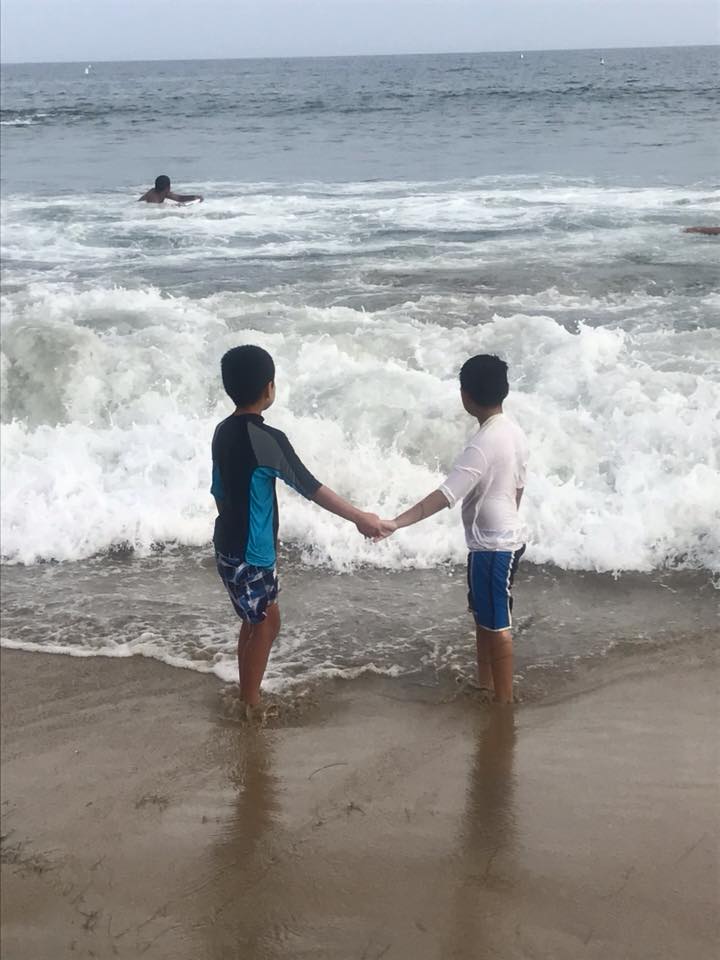
My 15 and 17 year old boys had been discussing masculinity with their friends and I wanted to hear their take on it.
Here’s what they told me:
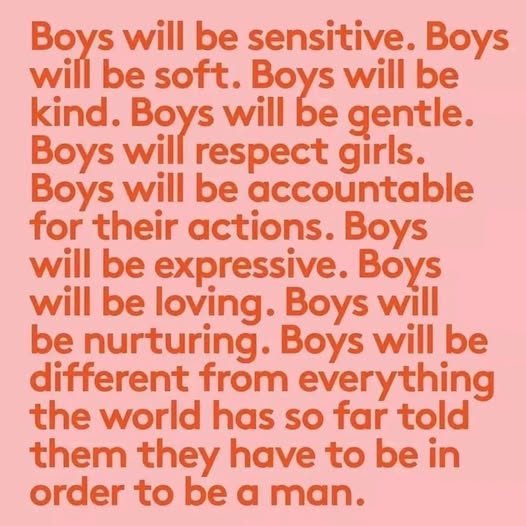
- Rather than needing to prove their manhood, they believed in embracing both the feminine and masculine parts of themselves.
- Rather than being “tough” and “strong,” they wanted to be emotional open and available.
- Rather than insisting on being right, they cared about listening to others and being accountable for themselves.
- Rather than demanding attention and respect, they valued making space and lifting others up.
To them, being a man meant having humility, integrity, openness, and empathy.
All their guy friends agreed.
Even though they had all been exposed to societal messages of toxic masculinity, they were able to recognize it and reject it for the harmful ideology it was.
“Whew! The kids are alright,” I thought to myself.
Putting them and my husband on the spot, I followed up by asking them what they learned about being a man from their father.
NoNo said, “He’s responsible… and funny. He respects our boundaries.”
Good qualities for any decent human being. I loved how non-gendered and non-binary the descriptions were.
I decided to dig deeper. “Do you think Dad has more power in our marriage?”
“No, it’s pretty equal,” replied NoNo.
“If anything, you’re the one who’s more in charge,” quipped KK.
We laughed.
While not exactly true, we talked about how I drove a lot of the big picture decisions for the family while their dad oversaw a lot of the details. It wasn’t based on strict gender roles and expectations but on personal strengths and values.
As we continued our conversation, I thought of what masculinity and marriage looked like just a few generations ago in my family. I thought of how women were treated in my culture.
And I was amazed at how my partner, my kids, and I were all breaking generational cycles.
Chinese culture has not traditionally valued women or equality. In fact, it has a reputation for misogyny and patriarchal hierarchy with its history of female subordination, foot binding, polygamy, female infanticide, and abandonment and neglect of daughters.
Many of these are evident in my own lineage.
My paternal grandmother was the second of two wives and became the favorite because she was young, beautiful, and bore two sons. My maternal grandmother, also known for her good looks, had to quickly get married to a widower to avoid getting abducted by the invading armies descending upon her city. Both were mere teenagers when they married.
When my mother’s dad died when she was 14, she was expected to drop out of school to support her brothers’ education. When my father’s family was struggling as refugees in Hong Kong, my grandfather considered selling off his youngest daughter.
My dad, the beloved firstborn son, had two daughters, much to the disappointment of my grandfather. I didn’t realize how much a disappointment until my brother came along 8 years later, doted on and adored as the miracle answer to prayer for a male heir to carry on the family line. When my grandfather passed, my brother (along with my uncle’s sons) received a portion of the inheritance. My five aunts also got an equal share, but only at the insistence of my parents who convinced my grandfather to be impartial. None of the granddaughters were acknowledged.
I recount these histories not with bitterness, but with sadness.
The women who came before me were so often devalued and dehumanized. In an age and culture that refused to fully see them for who they were, they had to find subversive ways to survive and reclaim power. This may have meant marrying a rich man, bearing sons, or fighting for a right to an education.
I do not fault my foremothers. I honor them.
I don’t envy their lives or their marriages, but I carry their strength with me.
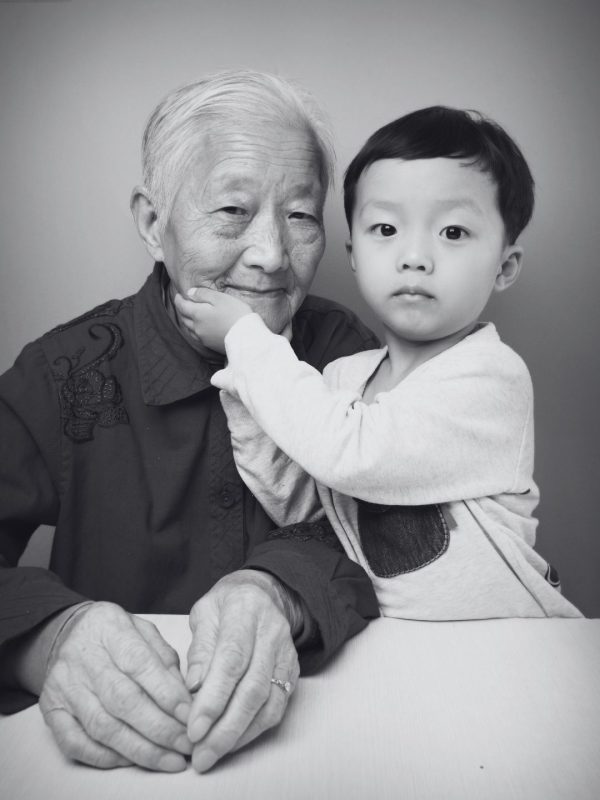
As a wife to a firstborn son and mother to two boys who will carry on the family name, I may have fulfilled my duty to my culture. But I would not be honoring my ancestors if I did not break the cycles of misogyny and patriarchy that have had a grip on us for generations.
As a woman, I refuse to be less than.
I know my worth and my right to be treated with dignity and respect. I know my power and I use my voice. I will not be silent, subservient, soft, or sweet to make others comfortable. I will not sacrifice myself in order to appease.
I will be fully myself.
And as a mother, I refuse to raise my boys to “be men.”
I will raise them to be whole and wholly themselves.
I will love and embrace every part of them, just as I welcome every part of me.
Perhaps, in doing so, all of us—from my ancestors down through to my descendants—will experience healing.
2 Responses
Thank you for this touching tribute to the women in your family and to the amazing way you have mothered two amazing young (almost) men who will move forward to make this world infinitely better for us all. As a mum of two white boys-men (age 15 & 19) I have worked hard to smash the patriachy and white supremacy in a 1-2 punch. Its hard but rewarding work. Thank you for being blazing this trail and sharing with humility.
Solidarity as we mother boys to smash the patriarchy together! 🙌